We have started the process for finalizing the upcoming CKAN 2.10 release, the culmination of almost two years of work by the Tech Team and dozens of contributors. This release is focused on making CKAN more robust from a security point of view as well as providing a better developing experience, with type hints, configuration declaration, support for signals and more.
We aim to release CKAN 2.10 in early January, and as a community-led project, you can help move the release forward in different ways.
The most important one is of course, testing: we need as many eyes as possible on the release branch!
- You can request a publisher account for https://beta.ckan.org using this form. You'll be able to create and edit datasets.
- To test the new release locally, you can use the dev-v2.10 branch in a source install. We are also testing a new recommended Docker-based setup and would love to get your feedback on that. You can send your suggestions or bug reports related to the Docker setup by creating an issue in the GitHub repository.
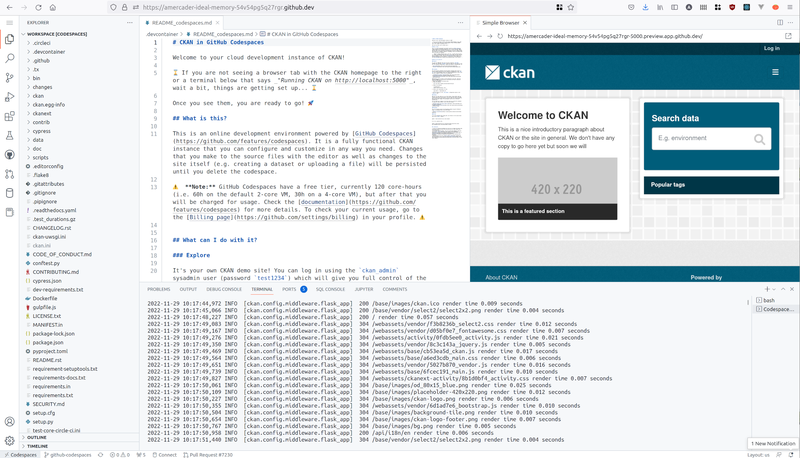
- If you want full admin control, being able to try specific configurations or extensions and are comfortable using GitHub, you can use GitHub Codespaces to boot your own fully customizable CKAN instance for free in a few minutes. Check the documentation and give us feedback, as we just started exploring this option.
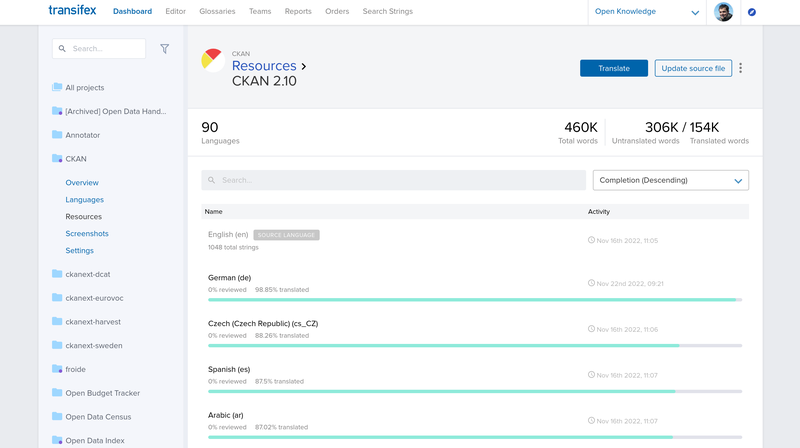
Another great way to support the project is contributing translations for the user interface. CKAN is used across the world and translated to dozens of languages. If you are a non-English speaker and want to contribute translations you can register to Transifex, the online platform we use to manage translations, and edit the 2.10 resource.
If you want to get in touch regarding the 2.10 release please create an issue in the main CKAN repository (if you think you found a bug) or start a discussion to ask questions . You can join the chat on Gitter.
Thank you for helping make CKAN better than ever!