In Category on 19 Oct 2026
How Greece built its national data portal on CKAN
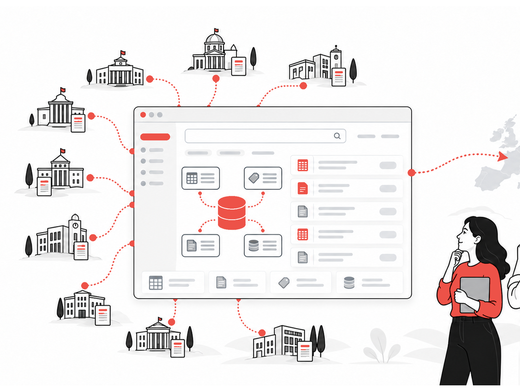
data.gov.gr now holds 22,000+ datasets from 510+ public bodies, with DCAT-AP metadata, quality scores and harvesting into data.europa.eu
How open-source, responsible AI, and digital public infrastructure shaped the conversation in Vitoria-Gasteiz.
On October 7–9 2025, several members of the CKAN community attended the
Open Government Partnership (OGP) Global Summit
in Vitoria-Gasteiz, Spain. More than 2,000 people from governments, civil society organizations, and policy circles gathered to explore one central question:
The Open Knowledge Foundation delegation —
Renata Ávila,
Lucas Pretti,
Patricio del Boca — joined long-time CKAN contributor and Tech Team member
Adrià Mercader. Together, they contributed CKAN’s perspective to discussions on open data, open-source software, digital rights, and the future of public-interest technology.
Throughout the Summit, they observed a strong global shift toward responsible AI, open-source digital public infrastructure, and renewed collaboration between governments and civil society. CKAN emerged not just as a tool, but as a proven, community-led infrastructure solution aligned with the values shaping the next chapter of open government.
Here are their reflections from the OGP Summit.
One of the most striking impressions from the Summit was how the geography of leadership in open government is changing. What began as a space led primarily by early champions such as the United Kingdom and the United States has gradually become more distributed, with African and Asian countries taking on increasingly visible roles.
The Open Government Partnership Summit offered a unique space for practitioners, policymakers and decision makers to share current challenges for access to information and participation for their citizens. The space started with a big push from both the United Kingdom and the US, which remain members. However, the leadership of the initiative has moved to a more distributed configuration, with now more African and Asian countries taking larger roles in OGP.
— Renata Ávila
This shift matters deeply for projects like CKAN. As more regions shape the open government agenda, the expectations for open data infrastructure broaden: multilingual, adaptable, and relevant to a wider range of political, economic, and institutional realities. CKAN is not just a piece of software; it is a shared, global asset whose governance, sustainability, and usability increasingly need to reflect this distributed leadership.
That invisibility is both a strength and a risk. A strength, because infrastructure that “just works” allows policymakers and civil servants to focus on impact rather than tools. A risk, because invisibility can lead to underinvestment, under-appreciation, and a lack of political sponsorship when it matters most. For CKAN to thrive as digital public infrastructure, its story has to be told more deliberately – not to centre the tool for its own sake, but to show why open, community-governed infrastructure is essential for democratic resilience.
Among the many sessions and hallway conversations at OGP, two themes stood out: the responsible use of AI in government, and the architecture of digital public infrastructure. As Adrià reflects, there was broad agreement that governments must use AI with safeguards, but far less certainty on what this looks like in practice.
The OGP Summit is mostly attended by public administration workers and representatives of civil society organizations. There were many interesting conversations but I would say that two of the main topics that were discussed were responsible use of AI and building digital public infrastructure. While there was wider agreement that AI processes should be used by governments in a responsible way and deployed with appropriate safeguards, how this looks in reality it’s another matter. I liked the call for open algorithmic registries that provide transparency and accountability.
— Adrià Mercader
The call for open algorithmic registries echoes the logic of open data itself: if algorithms shape rights, access, and public services, they cannot remain black boxes. Just as CKAN enables governments to publish datasets in ways that can be audited and reused, future infrastructure may need to serve algorithmic transparency in similar ways.
For Patricio, this discussion on AI was inseparable from the conversation on digital public infrastructure more broadly:
There was consensus that the future needs to be built on both responsible AI and open source. All the talks about integrating AI were firmly rooted in an ethical perspective, stressing the need for transparency and accountability. This directly ties into the parallel discussion on Digital Public Infrastructure, where civil society and governments seem to share a common agenda: the software running our governments should be open source, auditable, and transparent.
— Patricio del Boca
Here, CKAN becomes more than a “data portal solution”. It is a concrete example of what digital public infrastructure can look like when it is open-source, community-governed, and oriented toward public value. It demonstrates that infrastructure for democracy doesn’t have to be proprietary or opaque; it can be shared, forked, improved, and collectively stewarded.
When discussions turned explicitly to public digital infrastructure, CKAN was held up as a practical example of a long-lived, community-led project that already fills this role. In conversations with other open-source civic platforms like Decidim, common challenges emerged: resilience, sustainability, and maintaining community governance over the long term.
More relevant to CKAN is the discussion around public digital infrastructure. CKAN was presented as an example of an open, community-led project that can be used to build this infrastructure. In an event organized by OKF we discussed with other similar projects like Decidim the importance of designing for resilience and long-term stability, and the challenges around sustainability that these projects face.
— Adrià Mercader
Recognising CKAN as infrastructure, rather than just software, reframes the questions the community must answer. It shifts attention from features alone to governance models, funding mechanisms, and stewardship. It also reinforces why programmes like the U.S. National Science Foundation’s POSE initiative matter for the project’s future.
POSE support is not just about money; it is a signal that CKAN is seen as a critical part of the digital infrastructure needed to address societal challenges. That recognition can help accelerate efforts to address sustainability, governance, and collaboration at ecosystem scale.
Even as CKAN’s ecosystem matures and receives recognition, the audience around it is constantly changing. New generations of public servants and policymakers arrive with different reference points, and many of them have never heard of CKAN, even if they use portals built on it.
One thing that struck me is that the audience for these tools is always renewing, and CKAN isn't as well-known to new government officials as it used to be. It feels like there's still a lot of work to do in terms of outreach and making visible all the work that the CKAN community has done in the last 20 years. Not enough people realize that a community-led, open-source project like CKAN is actually the backbone of open data for so many countries around the world.
— Patricio del Boca
This is not just a communications issue; it is a strategic risk. If decision makers are unaware of the infrastructure they already rely on, they may be more vulnerable to pitches from proprietary solutions that promise convenience at the cost of openness and control. CKAN’s history and track record need to be visible enough to be weighed in those decisions.
For Lucas, this opens up a broader conversation about language, framing, and the way CKAN presents itself to the world:
I feel that the CKAN project should focus on storytelling, popularising the language, and speaking outside the bubble of open data geeks to present itself as the open, ethical, historically valued solution for opening public data. There is an opportunity to recreate the CKAN brand with a renewed purpose in a time when the enthusiasm for open and simple solutions is being renewed.
— Lucas Pretti
Reframing CKAN as “the open, ethical, historically valued solution” does more than polish its image. It anchors CKAN in a story about public trust, institutional memory, and the importance of open infrastructure in times of political and technological uncertainty. It invites new allies — not only developers, but policymakers, advocates, and civic technologists — to see themselves as part of the CKAN story.
One of the most concrete product-oriented discussions around CKAN at OGP concerned deployment. While CKAN is powerful and robust, that very robustness can be a barrier for local governments and smaller institutions with limited infrastructure or technical staff, according to Patricio:
Another important pillar of discussions during the OGP was the need to create some kind of Lite version, or one-click installation, for governments without infrastructure and technical capacity, as is the case with most local governments. CKAN is very robust, and perhaps too robust, for public entities that do not need so many features. This was the topic of some conversations between members of the Open Knowledge Network and partners, which are already bearing fruit in initiatives that will soon be announced, aimed at facilitating the implementation of local digital public infrastructure.
— Lucas Pretti
A “CKAN Lite” or one-click installation path would do more than simplify deployment. It would embody a principle at the heart of digital public infrastructure: that access to robust, open tools should not be restricted to those with large IT teams. Giving smaller municipalities, agencies, and civil society organizations an easier way in would broaden CKAN’s impact and distribute power more evenly across the ecosystem.
Designing such a variant also raises important questions: Which features are truly essential? How can simplicity be achieved without locking users into closed hosting arrangements? What governance models ensure that “Lite” does not become a second-class cousin to the “full” CKAN, but a complementary entry point? These are not purely technical issues; they touch on strategy, equity, and the long-term health of the ecosystem.
The OGP Global Summit highlighted a world where leadership is more geographically distributed, where responsible AI and digital public infrastructure are deeply intertwined, and where open-source tools like CKAN are recognised as essential yet remain too often invisible.
The challenge now is to turn those insights into action: renewing CKAN’s narrative, deepening its role as public infrastructure, lowering barriers to adoption, and aligning its evolution with the values of transparency, accountability, and shared stewardship. As enthusiasm grows again for open, simple solutions, CKAN is well placed to serve as a cornerstone of democratic digital infrastructure — not just for those who know its name, but for the millions who rely on it every time they seek public data.
________________
The U.S. National Science Foundation is strengthening the CKAN open data ecosystem through its Pathways to Enable Open Source Ecosystems (POSE) funding program. POSE was created to support open-source technologies that provide solutions to problems of national and societal importance.
data.gov.gr now holds 22,000+ datasets from 510+ public bodies, with DCAT-AP metadata, quality scores and harvesting into data.europa.eu
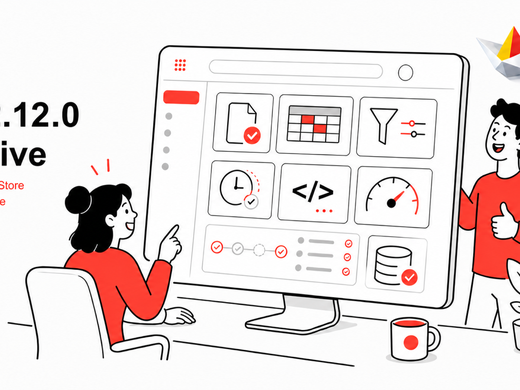
If you run a CKAN portal, 2.12 is the release to pay attention to. Large downloads stop crawling, files become things you can manage in their own right, the interface gets a modern refresh, and older instances get critical security fixes. It's the last 2.x release — and the groundwork for everything 3.0 brings.